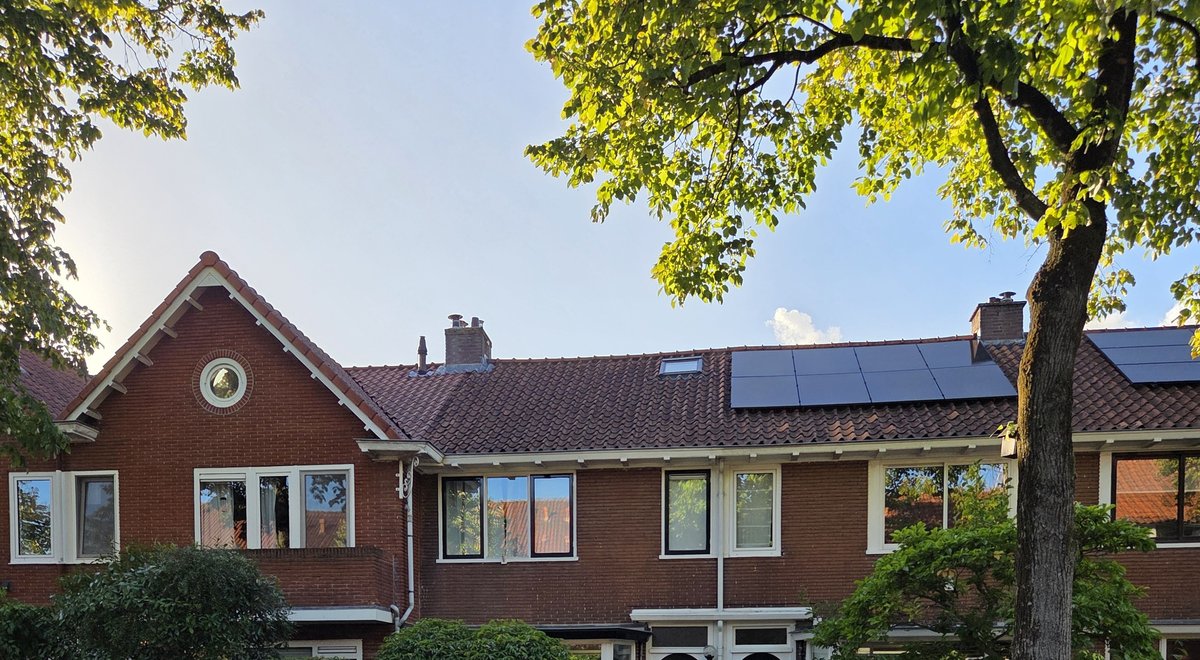


Your label in Krimpen aan den IJssel, in four points
The 12,774 homes in Krimpen tell a mainly post-war story. The village grew into a commuter town near Rotterdam, 49% of its houses date from 1946 to 1974 and the median construction year is 1973. For you that means the result usually hangs on a few familiar questions about the cavity and the glazing, and we go through those together.
- Type your postcode and house number into the calculator and you can read straight away what your home costs.
- For a house up to 150 m² you pay between €220 and €375. VAT and registration are part of that, and we charge no call-out fee.
- Allow one to one and a half hours for the visit. A few working days later the label can normally be found in EP-online.
- Short of time? Then pick our urgent service: the label is ready within 24 hours of the survey, for a surcharge of 50 to 100% of the label price.
See the price for your house in Krimpen
Selling, letting or a flat of your own: what is asked of you
Nobody orders a label for fun; there is always a moment that calls for one. In Krimpen it usually comes down to one of these three:
- A for-sale sign goes up: buyers should be able to read the class in the property listing, and the notary counts on a registration in EP-online. So sort it out at the start of the sale, not in the final week.
- A new tenant signs: they receive the label with the contract. The class also carries weight in the rent points calculation, which decides the highest rent you may ask. On its own that calculation costs €175, with a discount if you combine it with a label.
- Your flat or portico home changes hands: every apartment needs its own label. You cannot borrow the one from the upstairs neighbours or from another address in the building.
If the label is missing, private owners risk a fine from the ILT inspectorate of up to €515. A label stays valid for 10 years. A previous owner may already have had one made, and if it is less than ten years old you do not need a new one.
Surveying a house from the sixties: what we look at
The calculation follows the NTA 8800 method. Our advisor measures every surface that borders outside air, a crawl space or an unheated room, notes the insulation of roof, walls and floor and assesses the glazing. Heating, hot water, ventilation and solar panels are part of the survey too.
Homes from 1946 to 1974 usually have a cavity, but you cannot tell from the outside whether anything was ever blown into it. Proof makes the difference here: without paperwork the calculation falls back on what belongs to the construction year, and the cavity counts as unfilled. So look these up beforehand:
- The invoice for the cavity fill with the product type: the key document for this period
- The specification of double or HR++ glazing fitted later
- For an apartment: what the owners' association knows about roof, walls and any shared installation
- Make, type and year of your boiler or heat pump
- How many solar panels there are and their capacity
A word on your glazing invoice: the U-value on it applies to the pane only. The label works with the whole window, frame included.
Enter your address and work out your rate
A real label or just an estimate?
The provisional energy label ceased to exist on 1 January 2021. Whatever is calculated online without anyone having seen your house can therefore never end up in EP-online. Only a certified advisor who has surveyed the home in person can register it. So do not just set quotes side by side on price, but ask what comes on top for travel and registration. With us it looks like this:
| Item | Hollands Duurzaam |
|---|---|
| Standard rates | Between €220 and €375 (for homes up to 150 m²) |
| 24-hour express service | Surcharge of 50 to 100% of the label price, depending on the schedule |
| Call-out fee | No call-out fee in Krimpen aan den IJssel |
| Payment | Afterwards only, no deposit required |
| Turnaround | Standard delivery within a few working days |
| Certification | BRL 9500-MWA-W certified and officially registered in EP-online |
| Proof of quality | Review score of 4.9 from 70 Google reviews |
| Experience | More than 750 registered homes |
What does an energy label cost per property type?
| Property type | From (incl. VAT) |
|---|---|
| Studio / room apartment | € 220 |
| Apartment | € 275 |
| Maisonette / terraced house | € 330 |
| End-terrace or semi-detached house | € 340 |
| Detached house | € 375 |
All prices include VAT, the survey and registration in EP-online. Detached houses over 150 m² and special properties are quoted on request. Want to know what an energy label costs per property type? See the full 2026 price overview.
“I contacted Hollands Duurzaam on a Friday evening, and by Monday morning, Mark arrived on time for the inspection. That same evening, the energy label was in my inbox. Mark is a true professional, highly recommended!”
“Pleasant communication, proactive and explains things well during the inspection. Received the report the very next day.”
“Excellent inspection, received quickly. Very friendly and comprehensive help from Mark. In short, highly recommended!”
“I had a very pleasant experience working with Mark from Hollands Duurzaam. Everything was handled quickly and carefully, with excellent service! I highly recommend Hollands Duurzaam.”
Hollands Duurzaam is rated on average 4.9 out of 5 based on 70 Google reviews. View all reviews ›
Building periods in Krimpen: how old the homes really are
Statistics Netherlands does not split Krimpen aan den IJssel into several districts: the whole municipality is one district, with 12,774 homes and 29,625 residents. Whether you live in Oud Krimpen, Langeland, Boveneind, Lansingh-Zuid, Kortland-Noord or Kortland-Zuid, for the label we therefore look at the construction year rather than the neighbourhood. The national building register (BAG) gives this picture:
- The post-war core: 49% was built between 1946 and 1974. There it all comes down to the cavity and to whether the glazing was ever replaced.
- Further growth up to 1991: another 17% dates from 1975 to 1991. Together that puts roughly two thirds of all homes in the period 1946 to 1991.
- Younger houses too: 27% is from 1992 or later, of which 15% is from 2006 or later. Their indication is higher, as the table below shows.
| Building period | Share of homes (BAG) | Expected label |
|---|---|---|
| Before 1946 | 7% | Varies per home |
| 1946 to 1974, cavity unfilled | 49% (both rows together) | D - E |
| 1946 to 1974, provably insulated later | see the row above | B - C |
| 1975 to 1991 | 17% | C - D |
| 1992 to 2005 | 12% | B - C |
| 2006 to 2014 | 10% | A - B |
| From 2015 | 5% | A - B |
The percentages come from the BAG (November 2026). The label classes are indications, not promises: the survey decides the outcome for your house.
Has your house been standing since before 1946?
That goes for 7% of the homes in Krimpen. With such properties little can be said in advance, because all sorts of things may have changed over the years. Is your home a national or municipal monument? Then too you have needed a label for a sale or letting since 29 May 2026. If the class turns out low, you do not have to do anything: making the home more sustainable is not mandatory. You can read more under energy labels and monuments.
Start your request for Krimpen
Up from D or E: the order for post-war homes
If the cavity stays empty, a home from this period usually ends up at D or E. With provable retrofit insulation and HR++ glazing, C to B is achievable, and solar panels count directly in the calculation. Which step weighs heaviest for you is something the advisor tells you while he is at your home. For those who want more:
- Advice at the kitchen table: costs nothing and you get it during the survey itself.
- Worked-out improvement advice: for €85 you see on paper what it takes to reach the class you want.
Need money for the work? Look at the government's ISDE subsidy and at what the Nationaal Warmtefonds offers in loans. Once the insulation is in, you have a new label registered and the improvement counts officially too.
Reach us the way that suits you
The same advisor surveys your house and registers the label himself, with no call centre in between. We ask for no deposit: you settle up only after your label has been registered.
- Phone: the shortest way if the sale is in a hurry.
- WhatsApp or email: put your address and construction year in the message so we can answer to the point.
Frequently asked questions about an energy label in Krimpen aan den IJssel
Almost half of the homes in Krimpen date from 1946 to 1974. What does that mean for me?
I live in a portico flat in Krimpen. What do I ask the owners' association for?
Is cavity insulation still worthwhile in a house from 1965?
My home dates from 2006 or later. Do I still need a label?
What do I pay for an energy label in Krimpen aan den IJssel?
How much time is there between the survey and my label?
Can I keep using a label from the previous owner?
I want to let my house in Krimpen. Does the class affect the rent?
How is my glazing assessed if I only have an invoice for the panes?
Work out what your label in Krimpen costs
Service area around Krimpen aan den IJssel
Just outside Krimpen you can come to us as well: in Capelle aan den IJssel, Rotterdam, Ouderkerk aan den IJssel, Nieuwerkerk aan den IJssel and Bergambacht. All places are listed on our service area page.
More background on the energy label
Want to know exactly how the label works? In our knowledge base you can read the difference between a provisional and definitive energy label, what Rc- and U-values say about insulation and glazing, what the label classes A to G mean and how to find a registered label in EP-online.