The Hague housing market and the energy label
The Hague is by far the largest housing market in our region and has a remarkably varied housing stock. From stately 19th-century townhouses in the Archipelbuurt and Zeeheldenkwartier to densely built pre-war neighbourhoods like Schilderswijk and Transvaal, and from post-war districts such as Mariahoeve to modern Vinex new-build in Ypenburg. With its large international community and many apartments, a great deal is also rented out - and for both selling and renting an official, EP-online registered energy label is required.
We are regularly active across the Haaglanden region - besides The Hague also in Voorburg, Leidschendam, Voorschoten and Nootdorp - and we know the typical building periods and constructions per neighbourhood.
Which obligations apply when selling or renting out?
When selling, stating the energy label in the listing is mandatory; at the notarial transfer the label must be registered in EP-online. If your home in Den Haag goes into the rental market, the label partly determines your points in the WWS points count and with it the highest rent you may legally charge.
The label also counts towards financing: several lenders offer a rate discount at label A or B, because they assess the risk of a drop in value as lower.
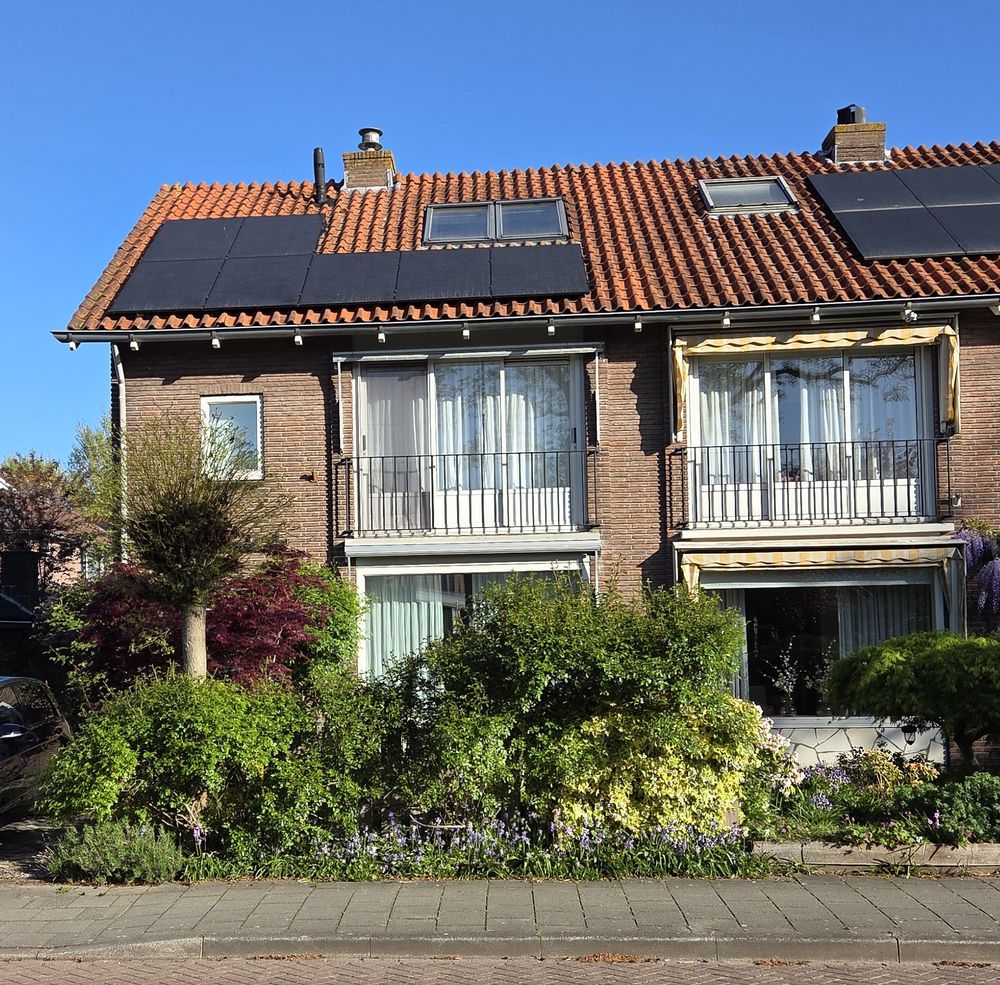
Energy label by neighbourhood in The Hague
The building period largely determines which energy label you can expect. The overview below gives an indication per neighbourhood; the final result depends on the specific property and any insulation already in place.
| Neighbourhood | Typical property type | Expected label |
|---|---|---|
| Archipelbuurt, Zeeheldenkwartier, Willemspark | 19th-century townhouses & monuments | E - G |
| Statenkwartier, Duinoord, Benoordenhout | Stately homes 1900-1930 | D - F |
| Schilderswijk, Transvaal, Regentessekwartier | Pre-war, densely built town houses | D - F |
| Bezuidenhout, Mariahoeve, Moerwijk | Post-war construction (1950s - 60s) | C - E |
| Scheveningen | Mix of coastal housing & new-build | C - E |
| Ypenburg, Leidschenveen, Wateringse Veld | Vinex new-build after 2000 | A - B |
Listed monument or protected cityscape?
The Hague has hundreds of national monuments and several protected cityscapes, including the Archipelbuurt, Willemspark and Zeeheldenkwartier. Since 29 May 2026 an energy label is also required for monuments when selling or renting. For a townhouse with single glazing and original details the label is usually somewhat lower - that is normal and you are not obliged to make improvements. Read more in our article on the energy label for monuments.
What our advisor measures during the inspection
The property inspection takes on average 60 to 90 minutes. Our BRL 9500-certified advisor records, among other things:
- All surfaces bordering the outside, crawl space, unheated rooms or water
- The insulation values of roof, facade, floor and glazing (U-values)
- The heating installation and hot-water system (boiler, district heating, heat pump)
- Ventilation and any solar panels
In large parts of The Hague - such as Mariahoeve, Moerwijk and Ypenburg - district heating is present; we process this correctly in the calculation according to the NTA 8800 standard.
Energy label prices in The Hague
All prices include VAT, the property inspection and official registration in EP-online. An energy label for an apartment or studio in, for example, the Schilderswijk or Regentessekwartier starts from €220; for a larger townhouse in the Statenkwartier or Benoordenhout it increases depending on type and floor area. Use the price calculator for an exact price for your home in The Hague.
“I dealt with Mark from Hollands Duurzaam very pleasantly. Everything was arranged quickly and carefully with excellent service! Definitely recommended.”
- Sandy van Rees · Google review
Hollands Duurzaam is rated on average 4.9 out of 5 based on 67 Google reviews. View all reviews ›
Four mistakes sellers in The Hague often make
Most delays around an energy label are not caused by the survey itself, but by when people start arranging it. These are the four things that most often go wrong:
- Starting too late. If you only call a week before the transfer, you pay an express surcharge of €50 to €100 and there is less room in the schedule. Better to start as soon as the property goes on the market.
- Not checking whether the advisor is certified. Only a BRL 9500 certified advisor may issue a valid label and register it in EP-online. A survey without that certification does not produce a legally valid label, and you find out at the notary.
- Not having documents ready. Construction drawings, insulation invoices and glazing specifications let the advisor calculate with actual values instead of the defaults for the construction year. In a pre-war Hague townhouse that regularly makes a full label class of difference.
- Assuming an old label is still valid. Check the expiry date in EP-online. Provisional labels from 2015 have not been usable since 1 January 2021.
Improvements such as extra insulation or HR++ glazing only count if they were carried out before the survey. Not sure whether a measure will be finished in time? Give us a call and we will work it out together.
Energy label for commercial premises in The Hague
Are you selling or renting out an office, shop or other commercial building? A label obligation applies there too, but with different calculation rules than for homes: a non-residential label rather than a residential one.
We are certified for residential buildings and do not register non-residential labels ourselves. For commercial premises we work with fellow advisors who are certified for that; call or email us and we will put you in touch with the right person directly. Not sure whether your property counts as residential or non-residential, for instance a combined shop and home in the old town or a practice at home? Give us a call and we will work it out together before you schedule a survey.
Frequently asked questions about an energy label in The Hague
How quickly can I get an energy label in The Hague?
I have an apartment with a homeowners' association (VvE). What do I need?
My townhouse in Statenkwartier or Archipelbuurt is a listed monument. Can I still get a label?
Does new-build in Ypenburg or Wateringse Veld also require an energy label?
What does sustainability advice add on top of the energy label itself?
I rent out a room in The Hague. Do I need a separate energy label for it?
Service area around The Hague
Besides The Hague we are active in, among others, Voorburg, Leidschendam, Voorschoten and Nootdorp. View the full service area.
Hollands Duurzaam provides energy labels throughout the entire Groene Hart region - see also our full service area.
More background on the energy label
Want to know exactly how the label works? In our knowledge base you can read the difference between a provisional and definitive energy label, what Rc- and U-values say about insulation and glazing, what the label classes A to G mean and how to find a registered label in EP-online.