Living in Kanis and the energy label
Kanis is a small village in the peat meadow area of the Woerden municipality, close to Kamerik. It consists of a compact village ribbon with older village homes, a modest post-war extension and an agricultural countryside with farmhouses along the polder roads. The expected energy label strongly depends on the construction period. A valid, EP-online registered energy label is mandatory when selling or renting out.
Kanis is about 10 minutes from our home base in Woerden, so we are on site very quickly and charge no call-out costs.
Which obligations apply when selling or renting out?
When selling, you must state the energy label in the listing, and it has to be registered in EP-online by the time of the notarial transfer. If you rent out a home, the WWS points count also applies: the label partly determines how many points your home scores under the Affordable Rent Act, and with it the maximum rent you may charge.
The label also affects saleability. A home with label C or better generally sells more easily than a comparable house with label F or G, because buyers factor in the insulation costs still ahead of them. Improving the property before the sale often pays off twice: a stronger position for you, and with some lenders a rate discount for the buyer at label A or B.
How to request an energy label in Kanis
You arrange an official energy label with us in three steps:
- Quote and appointment - calculate your price with the calculator or call us. We schedule the home inspection at a time that suits you.
- Home inspection - our BRL 9500 certified advisor visits (on average 60-90 minutes) and measures insulation, glazing, heating, ventilation and any solar panels using the NTA 8800 method.
- Registration in EP-online - your official energy label is registered in EP-online. You usually receive it within a few working days; if you are in a hurry, express delivery within 24 hours is possible.
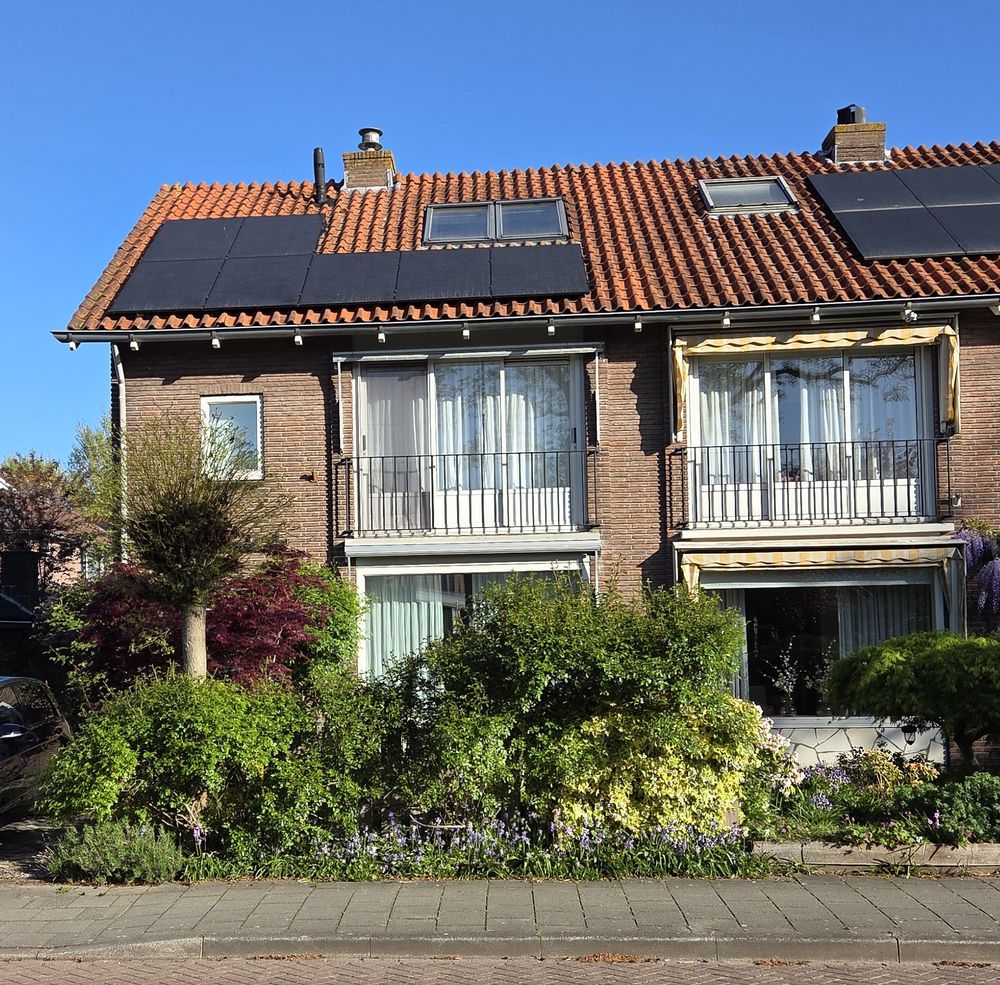
Energy label by neighbourhood in Kanis
The construction period largely determines which energy label to expect. The overview below is an indication; the final result depends on the specific home and any insulation already installed.
| Neighbourhood | Typical housing | Expected label |
|---|---|---|
| Village ribbon of Kanis | Pre-war village homes | D - G |
| Post-war village extension | Homes 1945 - 1980 | D - F |
| Later infill along the ribbon | Homes 1980 - 2000 | C - E |
| Recent infill | Homes from 2000 onwards | A - B |
| Agricultural countryside | Former farmhouses and detached homes | D - G |
Built on peat: what to keep in mind in Kanis
Kanis lies in the middle of the peat meadow landscape. Older homes and farmhouses here often stand on wooden foundations and have little original insulation, so without improvements the label typically comes out between D and G. That is an honest snapshot; improving the home is not mandatory. Have you already insulated or installed HR++ glazing? Have the invoices ready for the survey: with proof the advisor may use the actual values and the label often turns out better.
| Construction period | Typical characteristics | Expected label without upgrades |
|---|---|---|
| Before 1945 | Single glazing, little or no cavity insulation | D - G |
| 1945 - 1980 | Limited cavity insulation, partly double glazing | D - F |
| 1980 - 2000 | Standard cavity insulation, double glazing | C - E |
| From 2000 | Good insulation, often a high-efficiency system | A - B |
If you do want to improve the property, cavity wall insulation, HR++ glazing and a heat pump are the most obvious steps. Those measures not only raise your label class but also deliver direct savings: a well-insulated cavity wall noticeably reduces gas use for heating. What pays off most in your specific case is covered in the free improvement advice during the survey.
How exactly is the label determined?
The NTA 8800 method calculates the energy demand of your home based on insulation values, installations and the shape of the building. The advisor measures the surfaces, establishes the Rc and U-values of roof, walls, floor and glazing, and records the heating and ventilation system. Together those figures determine the label class; the calculation looks at what the building needs, not at what you personally consume.
What our advisor measures during the inspection
The property inspection takes on average 60 to 90 minutes. Our BRL 9500-certified advisor records, among other things:
- All surfaces bordering the outside, crawl space, unheated rooms or water
- The insulation values of roof, facade, floor and glazing (U-values)
- The heating installation and hot-water system (boiler, heat pump)
- Ventilation and any solar panels
The calculation follows the NTA 8800 standard. Especially the older peat meadow homes and farmhouses around Kanis, with irregular constructions and extensions, require an experienced eye during the survey.
Which documents do you need for the survey?
Having a few practical documents ready before the survey saves time and prevents the advisor from having to ask questions afterwards.
- A copy of the construction drawing or floor plan, if you have one.
- Invoices for earlier insulation work, such as cavity wall, floor or roof insulation.
- Details of the central heating boiler, such as year of manufacture and type.
- Information about solar panels, including the number and the capacity.
This pays off particularly in Kanis, because many older homes and farmhouses have been retro-insulated over the years without any record of it. If the evidence is missing, the advisor calculates with the default Rc value for the construction year, which is almost always less favourable than reality.
Energy label prices in Kanis
All prices include VAT, the property survey and official registration in EP-online. A smaller village home starts from €220; for a family home or a detached house in the countryside the price depends on type and floor area. See also our 2026 price overview per property type.
| Property type | From (incl. VAT) |
|---|---|
| Studio / room apartment | € 220 |
| Apartment | € 275 |
| Maisonette / terraced house | € 330 |
| End-terrace or semi-detached house | € 340 |
| Detached house | € 375 |
Each rate contains everything: VAT, the on-site inspection and the EP-online registration. Call-out or travel costs do not exist with us. Detached houses over 150 m² and special properties are quoted on request.
“I had a very pleasant exchange with Mark of Hollands Duurzaam. Everything was arranged quickly and carefully with excellent service! I can certainly recommend Hollands Duurzaam.”
- Sandy van Rees · Google review
“Quick response, certificate ready within 1 day, professional, nice contact. Recommended!”
- Jesper de Knegt · Google review
“Very nice company with good communication. It was arranged faster than expected. I would have the next energy label assessed by this company again.”
- Monique Duijvestijn · Google review
Hollands Duurzaam is rated on average 4.9 out of 5 based on 67 Google reviews. View all reviews ›
Frequently asked questions about an energy label in Kanis
How fast can I get an energy label in Kanis?
What does an energy label cost for my home in Kanis?
Which label should I expect for an older village home in Kanis?
I own a farmhouse or detached home in the countryside. What should I keep in mind?
Do recent new builds in Kanis already have a good label?
What is the fine for selling without a valid energy label?
Which documents should you have ready for an energy label in the peat meadow area?
What influence does the energy label have on the maximum rent of a home?
How are the costs of an energy label survey determined?
Is a new energy label required if you are going to renovate the home?
What is the difference between an energy label and sustainability advice?
Do you need an energy label for a listed farmhouse in the countryside?
How do you prepare a polder home for the survey?
Service area around Kanis
Besides Kanis we also work in Kamerik, Woerden, Zegveld and Woerdens Verlaat. See the full service area.