Energy label D required for rental homes from 2029: what landlords need to know
Do you rent out a home with energy label E, F or G? Then that home must have at least energy label D by 1 January 2029. The requirement was laid down in 2026 in the Buildings and Living Environment Decree (Bbl) and applies to private landlords, investors and housing corporations. In this article you can read exactly what the obligation means, which exceptions apply and what you can arrange now.
💡 Want to know where you stand first? An up-to-date energy label is step 1 - calculate the price for your rental home right away.
Calculate your price →What does the label D requirement for rental homes mean?
The Dutch government is phasing out the worst energy labels in the rental sector. The core of the rule:
- 🏠 For whom: all landlords of residential properties - private landlords, real estate investors and housing corporations.
- 📋 What: rental homes with energy label E, F or G must be upgraded to at least energy label D.
- 📅 When: by 1 January 2029 at the latest. The requirement was laid down in 2026 in the Buildings and Living Environment Decree (Bbl).
The measure does not come out of nowhere: it stems from the European Energy Performance of Buildings Directive (EPBD IV), the same directive that introduced the renewed energy label from 29 May 2026.
Will there be a rental ban for labels E, F and G?
No. There will be no rental ban: you may continue to rent out a home with label E, F or G to the sitting tenant after 1 January 2029, and no rental contract is voided by the requirement. But it is far from optional:
- ⚖️ Municipal enforcement - the municipality can take action to enforce that the home is brought up to at least label D, for example with an order subject to a penalty payment.
- 📉 WWS minus points - labels E, F and G already cost you 4, 9 and 15 rental points respectively, and therefore maximum rent. Read how the energy label affects your rental points →
- 🔍 Stricter checks - since 29 May 2026 municipalities have broader powers to enforce the energy label obligation anyway.
Waiting until 2028 is therefore mainly expensive: you miss out on rent for years, and by then contractors' schedules will be filling up with landlords facing the same deadline.
Which exceptions apply?
Not every rental home has to reach label D. The main exceptions:
- 🏛️ Monuments - national, provincial and municipal monuments are exempt from the label D requirement (although since 29 May 2026 they do need an energy label when sold or rented out).
- 📏 Small detached homes - detached homes smaller than 50 m² fall outside the obligation.
- 🏗️ Demolition or disproportionate costs - homes that will be demolished within two years, or where the investment turns out disproportionately high.
- 🏢 Mixed owners' associations (VvE) - does the upgrade require changes to communal parts (roof, facade, installations) and does the VvE not agree? Then the obligation lapses for the individual landlord. Read how the energy label works for an apartment and VvE →
Not sure whether your property falls under an exception? Feel free to contact us - we are happy to think along with you.
How do you know whether your rental home has label E, F or G?
That sounds obvious, but in practice this is where things often go wrong. Three situations:
- No valid label - then you don't know where you stand, and you already risk a fine of up to € 1,030 when entering into a new rental contract. Having a label drawn up is step 1 in any case.
- Outdated label - labels are valid for 10 years, but a label from, say, 2017 says little about the current state of the home.
- Label from before improvements - have you insulated, installed HR++ glazing or replaced the boiler since the last inspection? Then the home often already scores one class (or two) better in reality.
That last point is good news: for a share of homes with an old label E, a new inspection and registration is enough to show that the home is already label D or better - without a single structural change.
From label E, F or G to D: how to approach it
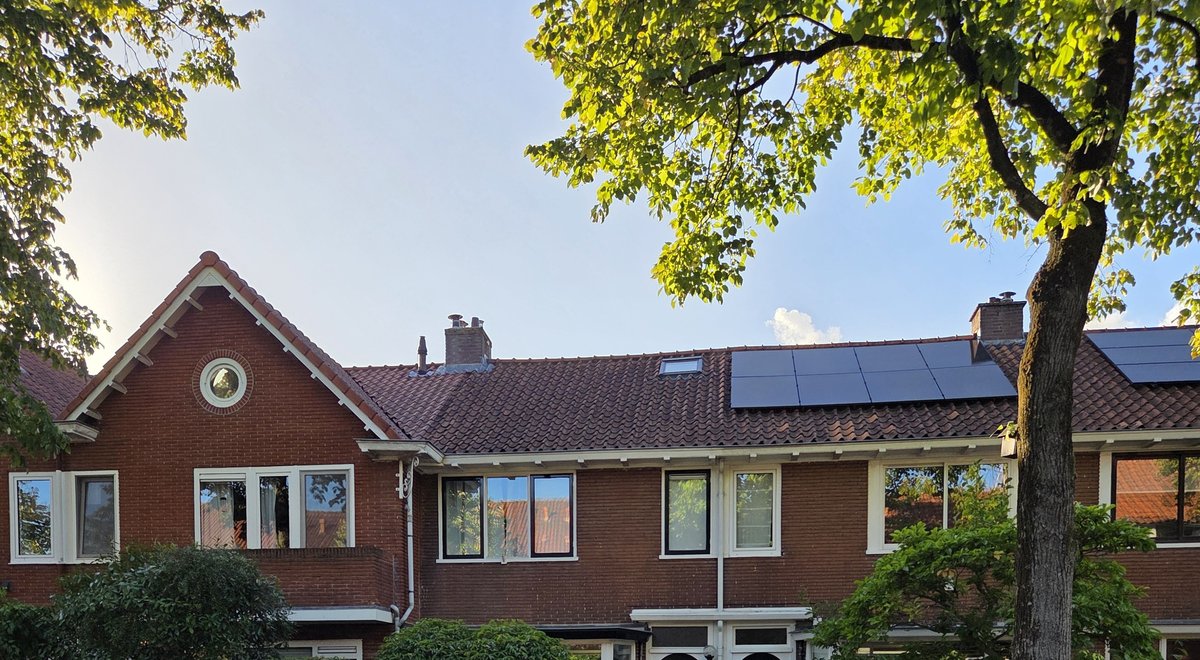
The jump from E to D is usually small; even going from G to D does not have to mean a complete renovation. Promising measures, roughly in order of return:
- 🧱 Insulation - cavity wall, floor or roof insulation delivers the biggest label jumps.
- 🪟 HR++ glazing - replacing single or old double glazing scores points immediately.
- 🔥 Installations - a modern high-efficiency boiler or (hybrid) heat pump counts substantially.
- ☀️ Solar panels - often good for a full label class improvement.
Which measure delivers the most for which home - and what it costs - is covered in our article improving your energy label: from D to A →. For landlords there is also the Subsidy Scheme for Sustainability and Maintenance of Rental Homes (SVOH), which is being simplified and expanded in the coming years.
Important: after upgrading, have a new energy label registered. Only then does the improvement officially count - for the 2029 requirement, but also immediately for your rental points.
What does this mean for investors and property managers?
Do you manage several rental homes in the Groene Hart region? Then it pays to review your portfolio now: which homes have label E, F or G - and which have no valid label at all? Hollands Duurzaam inspects multiple homes efficiently in one go and delivers an official label plus concrete improvement advice per property, so you know exactly which homes need attention before 2029 and which are already fine. See how we can work together →
Frequently asked questions
Which rental homes must have at least energy label D in 2029?
All rental homes that currently have energy label E, F or G must be upgraded to at least energy label D by 1 January 2029. The requirement applies to private landlords, investors and housing corporations alike.
Will there be a rental ban for homes with label E, F or G?
No, there will be no rental ban. You may continue to rent out the home, but the municipality can take enforcement action to ensure the home is brought up to at least label D. In addition, labels E, F and G already cost you rental points under the WWS points system.
Are there exceptions to the label D requirement?
Yes. Exceptions apply to monuments, small detached homes (less than 50 m²), homes that will be demolished within two years or where the investment is disproportionately high, and to rental homes in a mixed owners' association (VvE) if the VvE does not agree to changes to communal parts.
What if my energy label is outdated?
Old labels often come out too low. Have you insulated, installed HR++ glazing or replaced the boiler since the last label inspection? Then the home may in reality already score label D or better. A new inspection and registration can then already resolve the obligation, without any renovation.
Is there a subsidy for making rental homes more sustainable?
Yes. Landlords can use the Subsidy Scheme for Sustainability and Maintenance of Rental Homes (SVOH), which is being simplified and expanded. In addition, municipal schemes are often available for combined measures.
Read also
- Energy label requirements for landlords
- Which subsidies can you get to improve your energy label?
- WWS points: the Dutch housing valuation system
Request an energy label?
Know where you stand before 2029. At Hollands Duurzaam you pay from € 220 for an official energy label including free improvement advice - very useful if your rental home needs to move towards label D. We are BRL 9500-MWA-W certified, a member of AVEPA and registered in EP-online.